Showing posts with label museum. Show all posts

Saturday, May 18, 2019

Three-wheeled cart, in Goa, India


Pushpa took this photo and sent these notes with it:
Wheelbarrow 17th century
Made in West Bengal
We saw it at the Goa chitra museum in South Goa, and I thought you would like this snap:)
The museum's underlying theme was all things wheel. Private collection of someone by the name of Victor Hugo, Which interestingly is a popular Goan name:)

That interested me so I went to look for the guy.


Three museums on the ordinary citizen
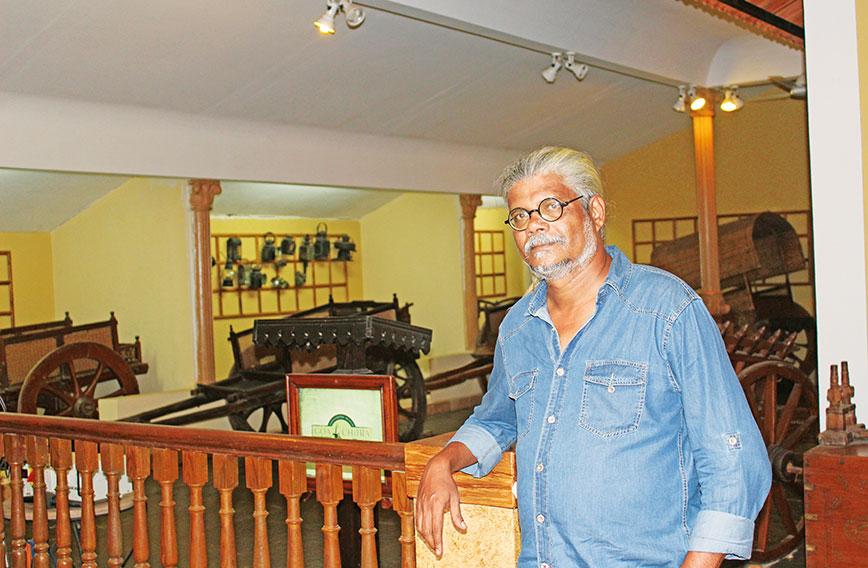

Victor Hugo Gomes at the internationally renowned Goa Chitra Museum

About a year ago a Russian girl made a frantic call to Victor Hugo Gomes, curator and founder of the internationally renowned Goa Chitra Museum. The architect in whose house she had rented a room had passed away and the family was going to put his collection of books to the torch. Victor acquired the collection. Among the many books was a diary dating back to 1861 and a mysterious woman named Isabella Michael.

Why did that Russian girl think of Victor Hugo Gomes?

Two years ago the temple committee of the Shree Bugga Sangameswara Swamy Temple in Guntakal, Andhra Pradesh got in touch with Victor. A rath belonging to the temple was on the verge of destruction and they desperately needed someone to preserve it. The rath was eventually sold to Goa Chitra Museum and it now stands at the entrance, totally restored, granite wheels and all.

Why did the temple committee think of Victor Hugo Gomes?

Because single-handedly he has set up three museums in a span of seven years — Goa Chitra, Goa Chakra and Goa Cruti. The museums aren’t about kings and rulers or about famous men and women but about the common man. There are saxophones, clay apparatus for distilling feni, surgical implements, ploughs, cameras, walking sticks, colonial furniture and the original plaques from the casket of St Francis Xavier. The common theme is the ordinary man.

“If you have noticed, the artifacts and the museum are not guided by aesthetics, but by utility,” says Gomes. “Everything here has utility value and was used by common people over the years.”

When Goa Chitra was inaugurated in 2009, the ceremonial lamp was lit by six traditional professionals: a toddy tapper, a farmer, a basket weaver, a fisherman, a coconut plucker and a potter. Nothing symbolises the ...

At that point I would have needed to subscribe to read the rest, but if you're interested, this might lead to other articles and videos: Google search for Victor Hugo Gomes

Friday, September 7, 2018

Avebury, UK, 1930's, assortment


In the 1930's, a wealthy man named Alexander Keiller was doing archeological work in and near Avebury, UK. They used these three wheelbarrows (along with other and odder equipment). I took the photo from an image in the museum in Avebury.

Looks like there's a wooden wheel (probably iron clad), a rubber wheel, and a continuous track / tank tread on two wheels.

Sunday, March 19, 2017

Australia, from 1940

Claire Horsley sent this from Australia:


The wheelbarrow was made in 1940 and is located in an historic German cottage in Doncaster, Melbourne, called Schramm's Cottage.


Sunday, October 23, 2016

Friday, August 19, 2016

Gloucester Life Museum

The former "Folklife" museum in Gloucester, now Gloucester Life Museum, has this wheelbarrow as part of a WWII display about young women working on farms during the war.


Friday, April 15, 2016

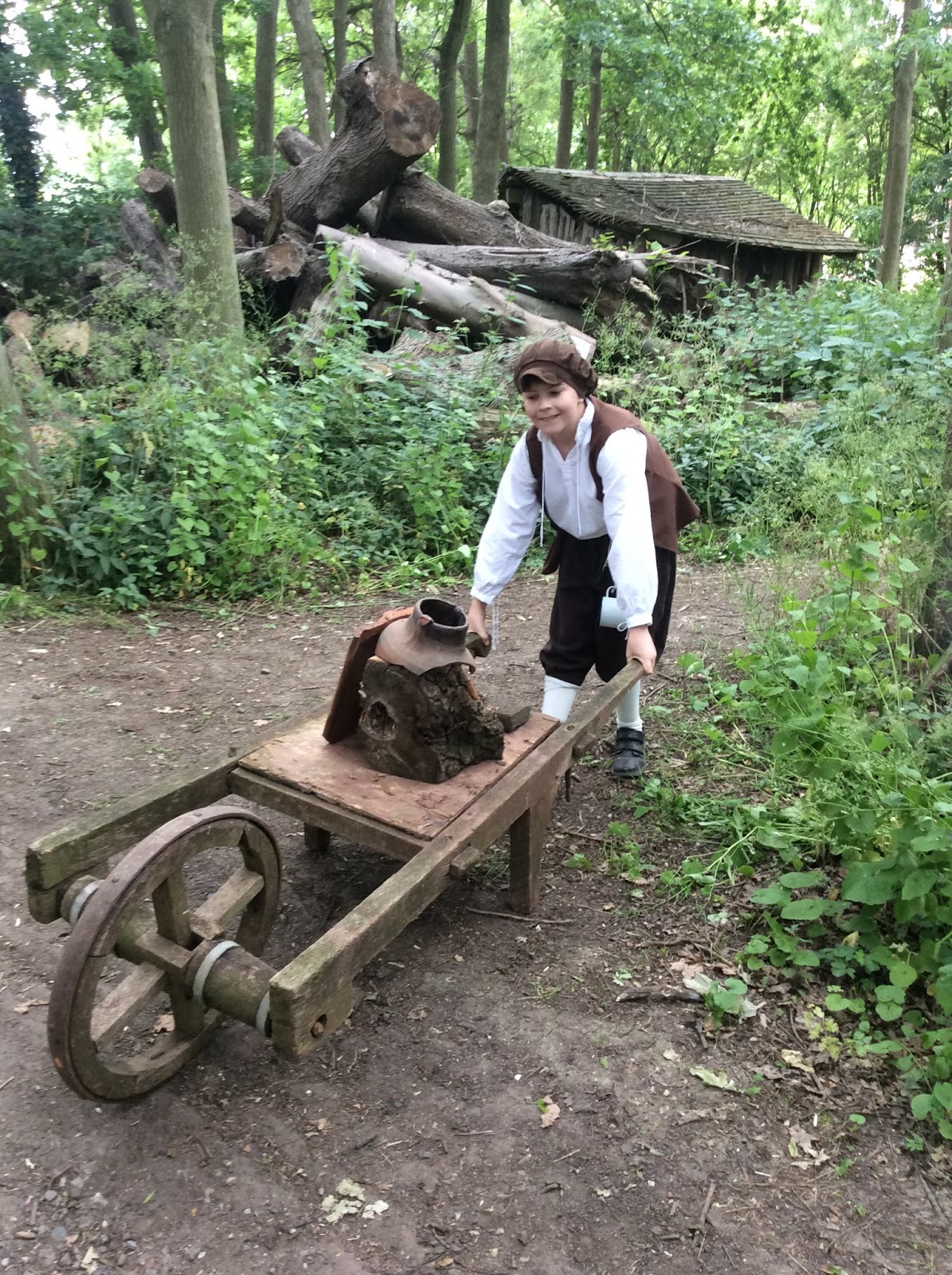
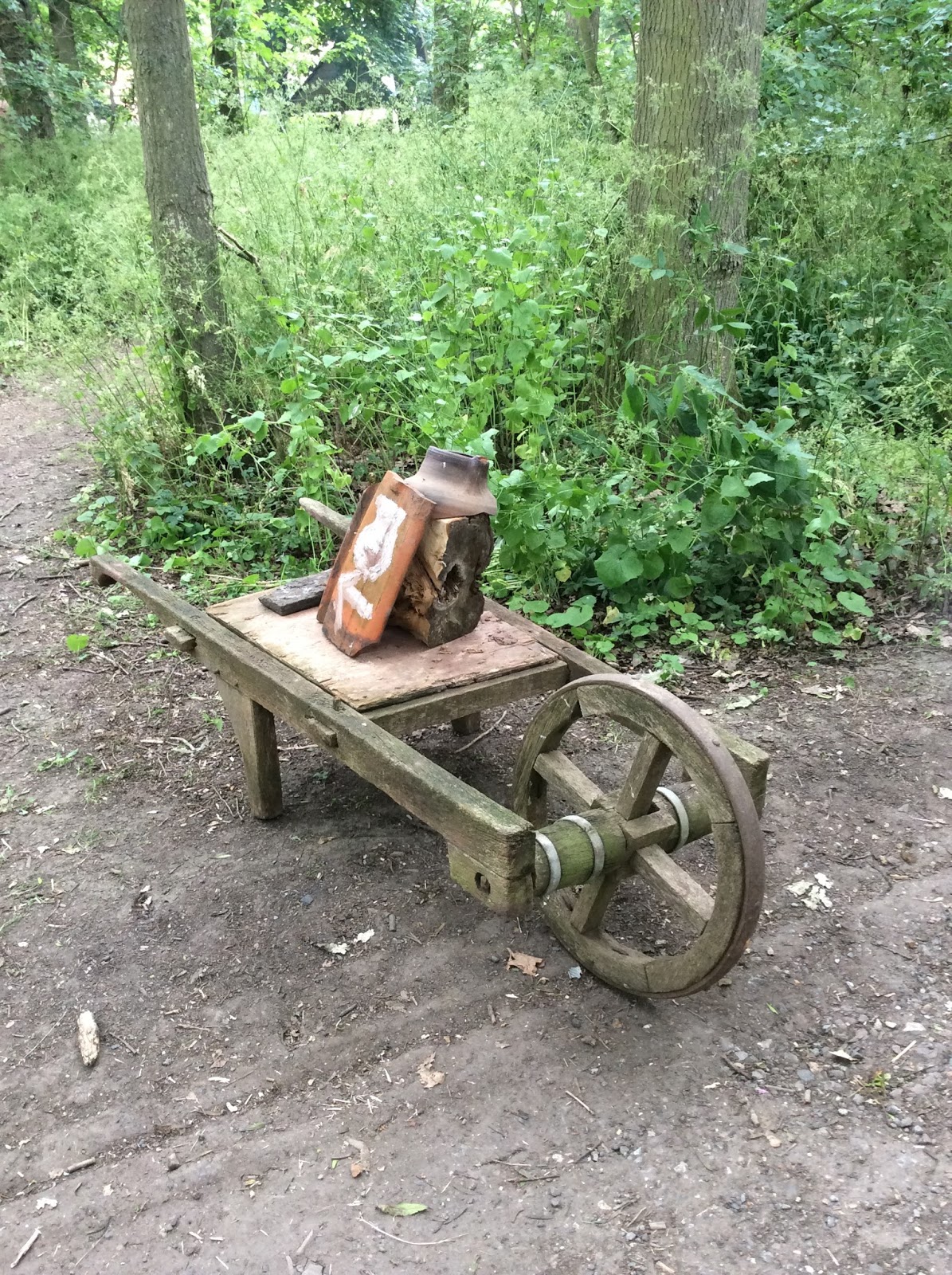
Kentwell Tudor Wheelbarrows

Last year I put one photo, but today I noticed there were two wholly different contraptions!

So here is Adam Daniel and commentary with the wheelbarrow that has a deep container, and below is the one with a flat surface. Not sure, then if it's still technically a barrow. Still, nice details. Photos by Adam's mom, Julie.


Both have iron-clad wheels.

Thursday, May 1, 2014

Fishbourne excavation, 1960's

Fishbourne Roman Palace has a recent-ish wheelbarrow history.

In the display, which is largely about the discovery, excavation and preservation of the site, there is a photo of lots of archeologists and volunteers with wheelbarrows. In the display there is some graphic art of a man using a wheelbarrow, and another of some of the workers resting (not very comfortably, unless they were really tired and the metal was cool).


That last photo is fun. I've brought it here the day I was there, with a story about wheelbarrows and my dad. Fishbourne, July 17, 2013.

Tuesday, March 11, 2014

"Royal Wheelbarrows"


This photo of Osborne House is courtesy of TripAdvisor

David Newbitt's commentary, on a photo of his that has been removed:
Another shot from our trip to Osborne House. These are the wheelbarrows used by Queen Victoria's children to tend their vegetable plots. They must have been non-sharing children, as each has his/her name painted on them (Pss. H is Princess Helena, Pss. R is Princess Victoria, Princess Royal and so on).

Apparently their father, Prince Albert, encouraged them, and bought their produce from them at going market rates!

Friday, October 25, 2013

Norton Simon Museum, Pasadena

Pam Sorooshian and I had just been in the "European Art : 17th – 18th Centuries" rooms for a few moments when I said I was going to look for a wheelbarrow. The very next painting I saw had one. Cool!!!


The painting is by Jan Steen, a Dutch artist, in around 1668. Part of the description was "In front of an inn, a hopelessly inebriated young woman is being helped into a wheelbarrow." The title is "De wijn is een spotter," translated to English as "Wine is a Mocker."


More from the museum's site (added here July 24, 2014):
Wine is a Mocker, 1663-64
The inscription above the door is from Proverbs 20:1, which reads: “Wine is a mocker, strong drink is raging and whosoever is deceived thereby is not wise.” In front of an inn, a hopelessly inebriated young woman is being helped into a wheelbarrow. Although the woman’s low-cut dress and red stockings mark her as a prostitute, her rich and exquisitely delineated clothing indicate a more privileged status. Jan Steen subtly conveys the message that not only are those of superior position as susceptible as the lowly to the sins of drink, but that their disgrace is perhaps more pitiable because of the distance they have fallen.


Note added June 6, 2026:

Near the end of Bilbo's eleventy-first birthday celebration in The Fellowship of the Ring, Chapter 1, "A Long-expected Party," Tolkien describes the departure of the guests:

"About midnight carriages came for the important folk. One by one they rolled away, filled with very full but very unsatisfied hobbits. Gardeners came by arrangement, and removed in wheel-barrows those that had inadvertently remained behind."

_____________

When I went to get the quote (because I'm separated from my library these days, Google's AI told me some other things about wheelbarrow-removal of drunks in art, literature, and history. I might track them down and make individual posts later, but here's this in case I don't: https://share.google/aimode/kJsmlUtuqcZWcSBPD

Friday, August 23, 2013

Anachronistic Wheelbarrow

At the fairground at Hollycombe Steam in the Country, East Hampshire, July 21, 2013.


Saturday, August 17, 2013

Pendarvis historical site's wheelbarrow

Jen Lynch wrote:
Here is another wheelbarrow photo for you. It is from the Pendarvis Historical site in Mineral Point, WI (http://pendarvis.wisconsinhistory.org/). It is a wheelbarrow that was used to move lead ore. Feel free to use the pic in any way you choose. I love "collections!" I have hundreds of pics of windows and doors from around the world, and when my daughter was very small she collected dried glue of various sorts. Now wheelbarrows are catching my eye everywhere—thanks for calling them to my attention.

Thursday, August 8, 2013

German wheelbarrow, an old one


This photo is from Wikipedia. From its name I learn that the German word for wheelbarrow is "schubkarre." My first thought is "schlep" and "cart." I await the clarification of a German. (I'll try to remember to send a link to Wolfgang Marquardt or Sabine Reichelt after this post is out.)

That wheelbarrow is in an open-air museum in Germany. The image lives here and is linked on wikipedia's Wheelbarrow page.

Deutsch: Schubkarre im Freilichtmuseum Neuhausen ob Eck
English: Wheelbarrow at the Freilichtmuseum Neuhausen ob Eck

Sabine wrote:  ""Schub" comes from "push", and "karre" means "cart", maybe it is because one has to push the cart to get it go. "

Wolfgang wrote:  Schub comes from schieben means Pushing

Thursday, July 25, 2013

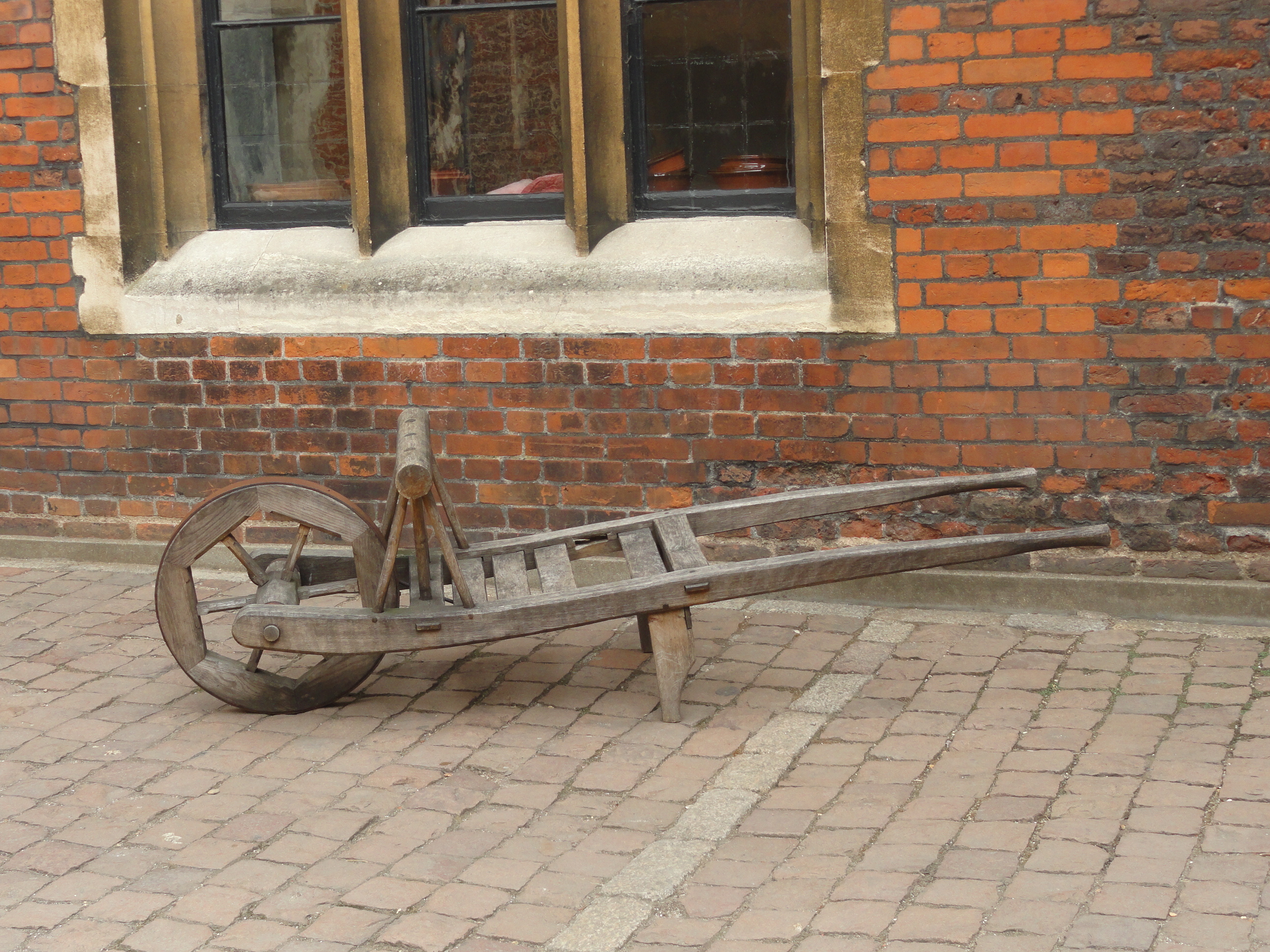
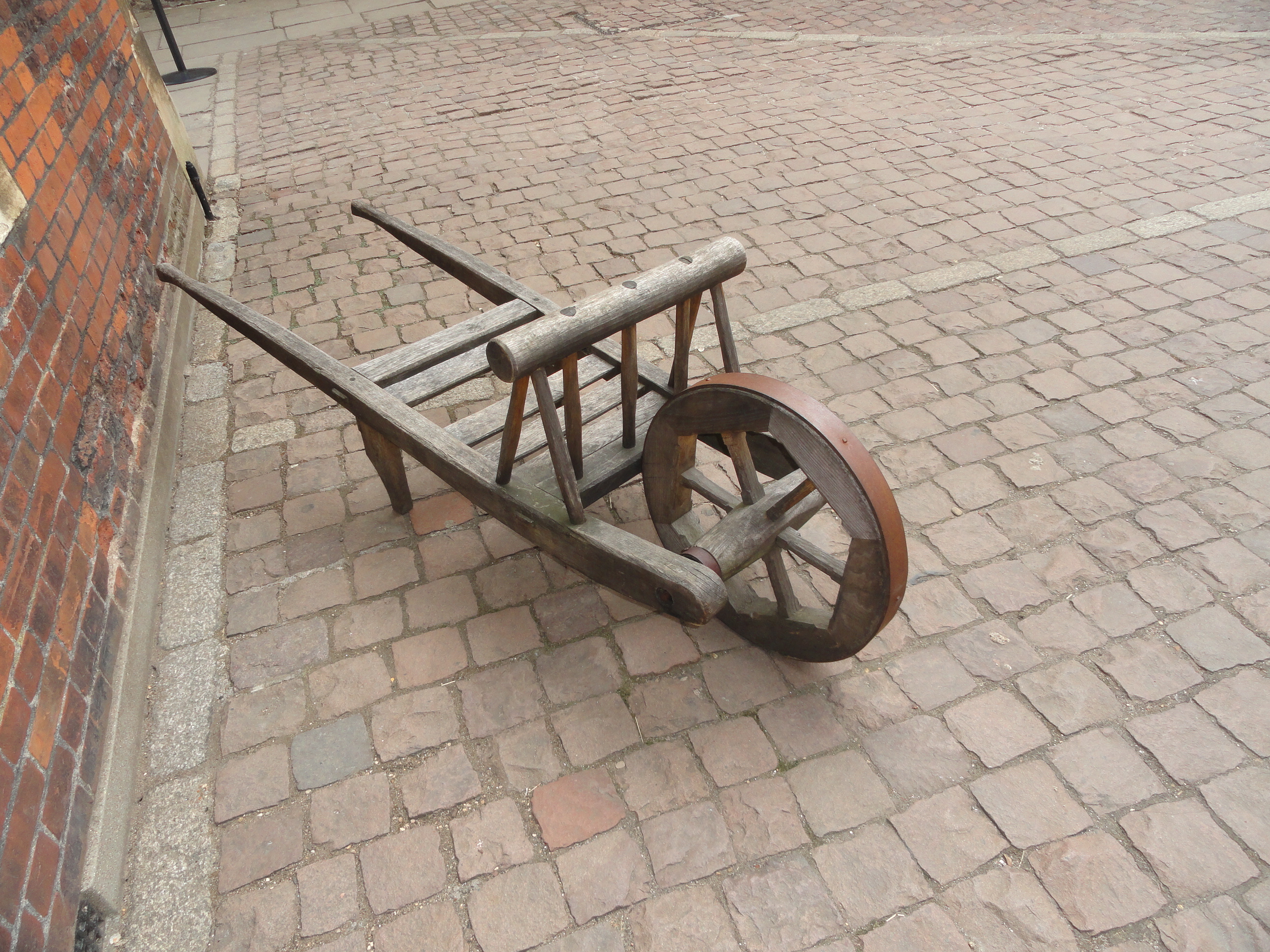
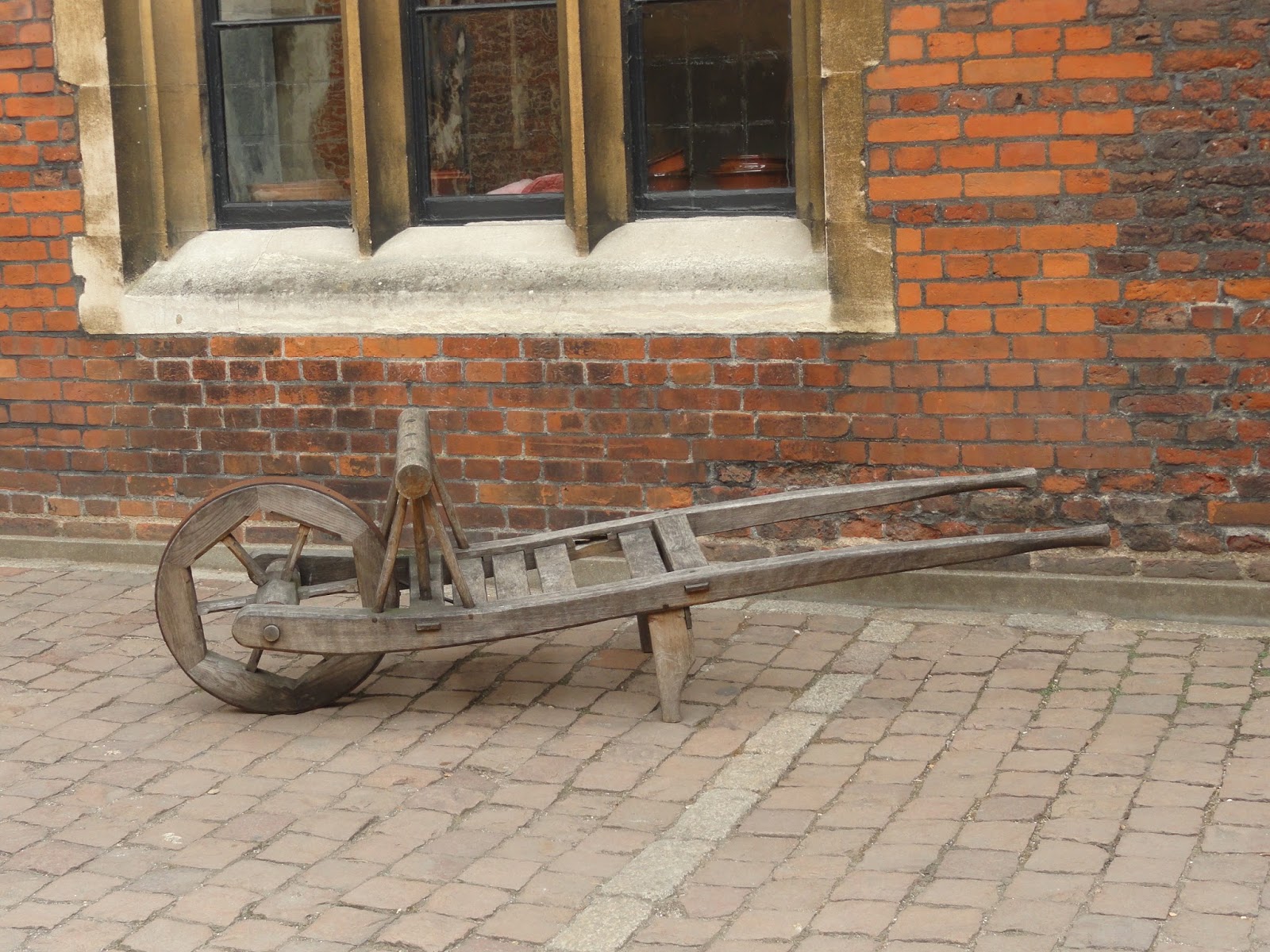
Hampton Court's old wheelbarrow

I mentioned this in the post on Chichester, but here is that view and another, in photos I took in May, 2011:


Being in such a prominent spot as Hampton Court, there must be other mentions and photos of it. I'm curious about that wheel construction. It's not like a cartwheel with spokes, but it IS ringed in iron (an "iron tyre" put on by a blacksmith). It seems, this sort of spokes-to-blocks form, could be really strong for this sort of use by one person.

Here is one, showing bags in it, and linking (if you click it) to a small site called "Wheel Barrow Wheels."

I don't know who took this photo.


Sunday, July 21, 2013

Chichester last Tuesday

Tuesday, July 16, I was in Chichester with Julie Daniel, Adam Daniel and Joyce Fetteroll. We had planned a day of touristing, with seeing the second preview performance of Barnum, that evening.

In the morning, we went to the Cathedral, and we did the edges first. There was a small construction site, and I hoped for a wheelbarrow. Knowing I would, the others had already checked it out. Julie teased me, that I would go to Chichester Cathedral, looking for a wheelbarrow.

But when Julie took me to Hampton Court a couple of years ago, there was a wheelbarrow:


It was nice of them to put it out in the courtyard that way. (So I hope people won't just read the photos here; that wheelbarrow wasn't at Chichester last Tuesday.)

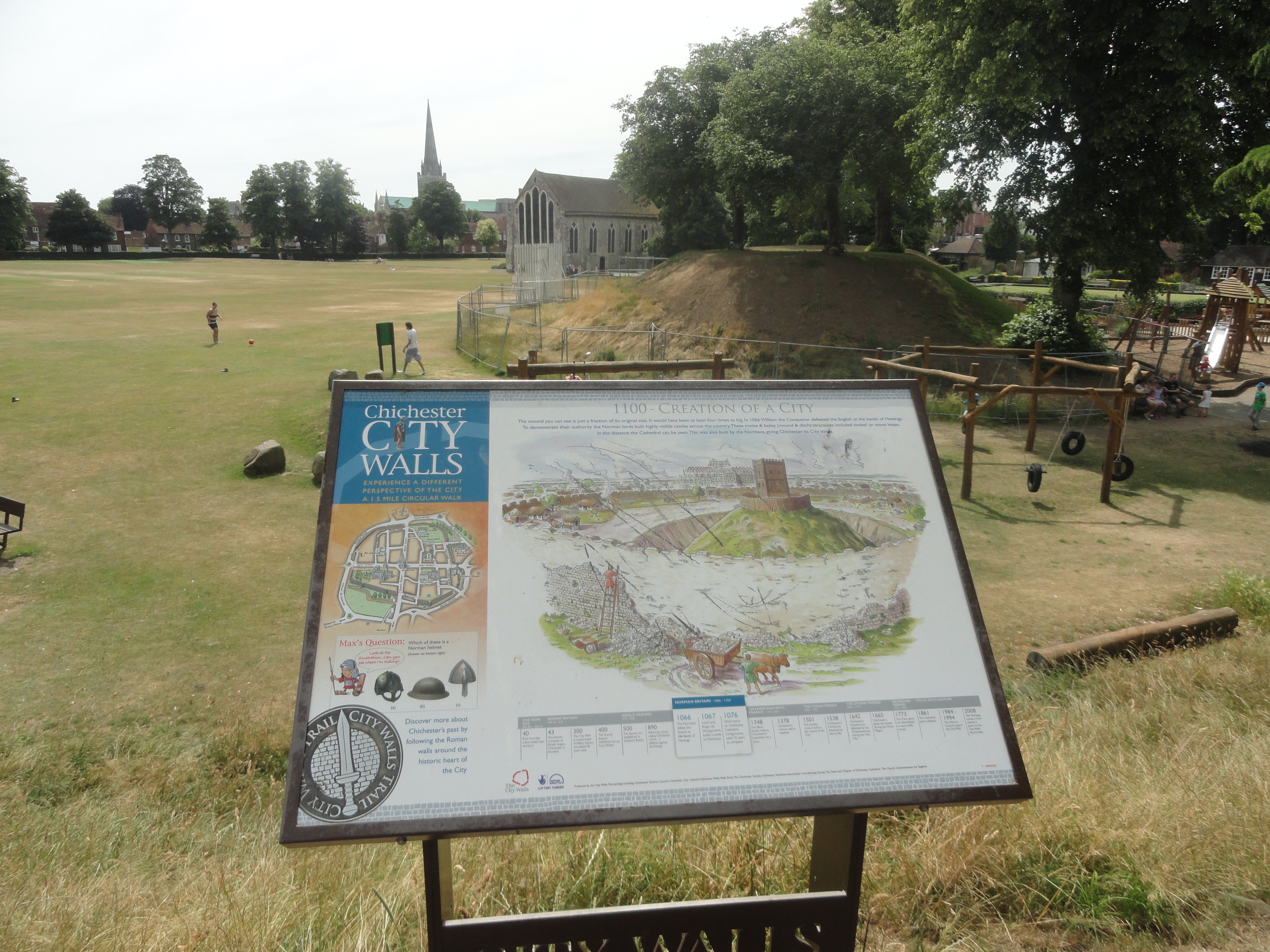
Joyce and I went to walk on the city walls. We came to a sign saying a playground would be closed because of excavation of a motte and bailey castle. That never happens in New Mexico, but it happens here. We walked a bit, on the ground, looking for the way up onto the wall, and saw the mound, and the playground (not closed; full of people), and the construction fence, and a truck with a wheelbarrow! My feet were sore and I didn't want to walk all the way over there, so I had the brilliant idea that if we went on up onto the wall, I could get the wheelbarrow with my zoom lens!

DOH! Bad angle. You can see one of the feet of it, sticking up, past that bag, sort of.

 photo DSC04239.jpg

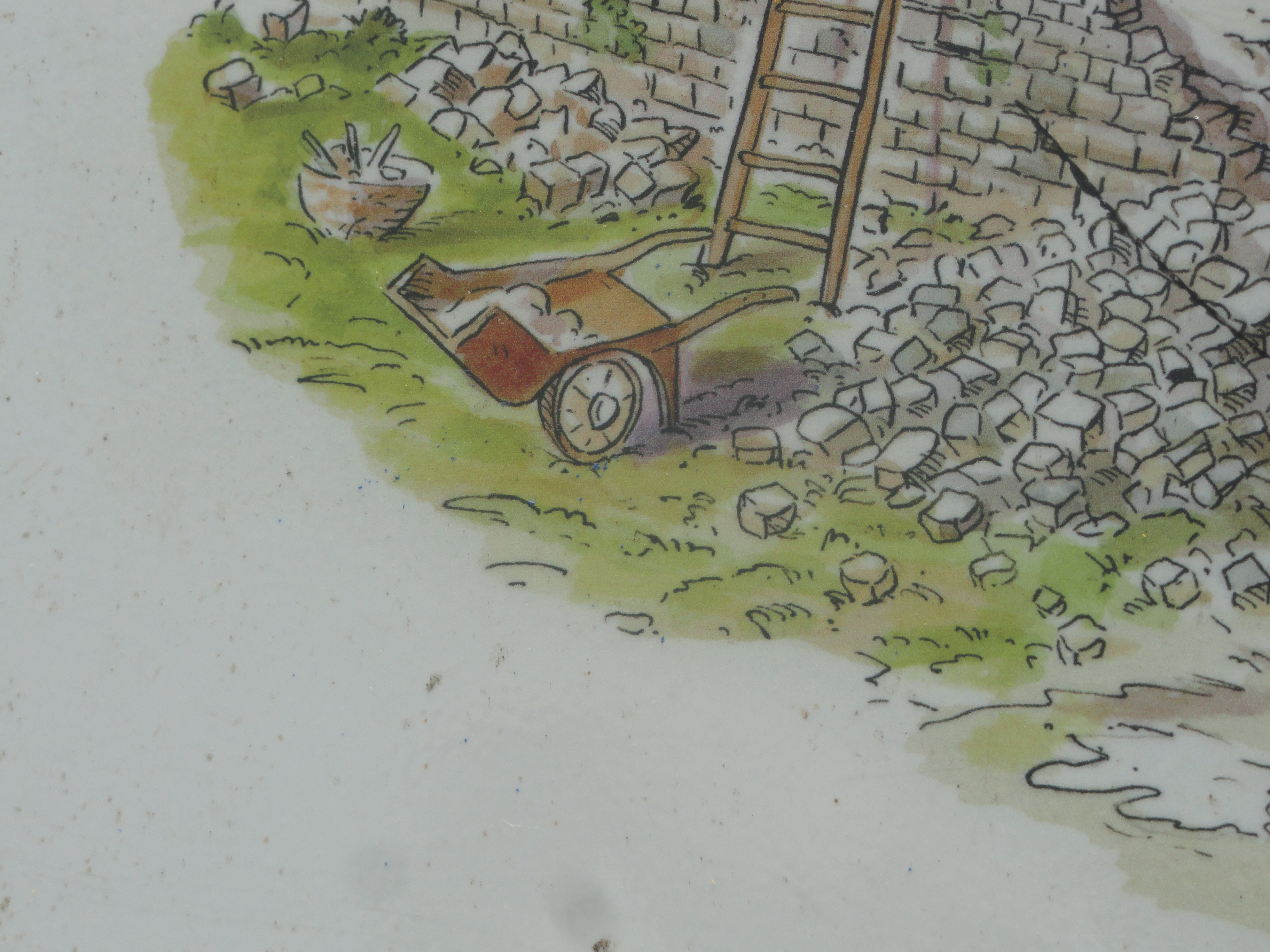
So I took my bad photo, and continued along the wall to an explanation of what they were working on down there.. And there, lower left, in that explanation....
 photo DSC04250.jpg


Artist's rendition of wheelbarrow I would like to see in real life.
 photo DSC04249.jpg

So we went merrily along, back to town, afternoon tea in an old medieval vaulted building, went to see Barnum (musical about PT Barnum in the US, which has nothing to do with anything, except the scene where they're building the American Museum is choreographed with three wheelbarrows.

I did not take photos because I am a Good Person and my good husband persuaded me years ago to give up pining for images of live theatrical performances, because only paying audiences get to see those things. But the wheelbarrows exist outside the show, and Shelby Coleman will be at the premier, and will get to go backstage because her late husband composed the music, and she's going to try to get a photo of one or more of those, and to find out who retrofitted them to seem older than they are. They had solid metal wheels.

So as the turned out, there were wheelbarrows even though Chichester Cathedral failed to provide one.


Tuesday, July 2, 2013

Archeon

Archeon living history museum in The Netherlands has a couple of wheelbarrows. If there were more than two, I'm sorry I missed the other(s)!


They were made by archeology students or by woodworkers employed by the museum. It's a great place with some fine artifacts from several periods (prehistoric farmers, medieval, Roman), in buildings made in historical ways, and people can go in and poke around.
Archeon

Sunday, June 23, 2013

Which came first, the chicken or the wheelbarrow?


I photographed this on June 20, 2012, at Legoland, near Windsor.

As wheelbarrows go, it has many flaws. As age goes, it's older than any living chicken, and surely older than the Lego-built chicken next to it.

It has an edge. as a dolly would, but a single-wheeled upright/dolly/handcart wouldn't be very stable. The handles are VERY low. Maybe it once had longer legs.

It was in the Vikings area at Legoland.